


What does mitochondrial DNA testing show, when do you need it, and what are its limitations?
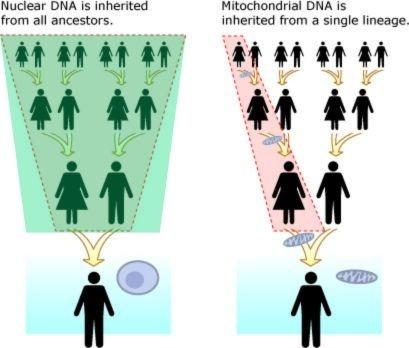
Nowadays, it is easier than ever to learn about your family history. There are many DNA methods, but maternal lineage DNA research has become the most useful for people who want to learn more about their immediate maternal roots. With this kind of research, information from generations past is found that is not usually in standard family documentation. Many people choose mitochondrial DNA testing to find out about their mother's side of the family, but it is important to know what it can and cannot reveal. You should read this blog to know what the test is for, when you might need it, and what its limits are before you take it.
What Mitochondrial DNA Reveals About Your Maternal History?
Since mitochondrial DNA comes from the mother, this test shows a single line that goes from you to your mother, then to your grandma, and so on. This is why maternal lineage DNA is thought to be one of the best ways to find out about deep ancestry. This test is very powerful because mitochondrial DNA changes very slowly over time. Scientists can then compare your results to haplogroups, which are ancient DNA groups that lived a very long time ago. This helps figure out where your mother's family came from in the past, like Africa, Europe, Asia, or the Americas.
The mitochondrial test also determines if two people come from the same mother[1]. Testing their mitochondrial DNA can confirm or disprove a maternal link, even if their family tree is not clear. This makes it useful for people who want to find out if they share a female ancestor, especially if they were adopted, lost family papers, or changed their last name.
When Do You Need Mitochondrial DNA Analysis?
Many people get maternal lineage DNA tests when they want to learn more about their family history or are interested in their ancestry that is not shown in public records. People who want to learn more about their old racial background will find it very helpful. This DNA test gives you a long-term view of your family history, while others only examine recent family connections.
You might also need the test if you are looking for family members through your mother. People from different families can still match because the mitochondrial line doesn't break. For instance, if two distant cousins want to know for sure if their mother's ancestors were connected hundreds of years ago, this test can give them solid genetic proof.
Some people also choose to get a maternal test for health reasons. Even though this test is not a medical evaluation, mitochondrial DNA can sometimes show patterns that are passed down that are linked to some rare diseases. In these situations, the test can help you figure out if a problem might have come from the mother's side. However, it is important to keep in mind that this test is mostly for ancestry and not for medical reasons.
What Are the Limitations of Mitochondrial DNA?
There are some things that maternal lineage DNA cannot tell you that are very helpful. One big problem is that it can't tell you everything about the entire family tree. It solely concentrates on maternal direct connections. This means you don't learn anything about your father, grandfather, or any other family members who are not related to your mother. People who take the test hoping to learn about their whole family tree are sometimes let down because it only gives them limited information and not a complete overview.
One more problem is that the test doesn't tell you what percentage of your DNA is from different racial groups. A lot of other DNA services can break down your background into numbers, but this one can only tell you who your old mother group is. It can't show the variety of your ancestors' genes because mitochondrial DNA is such a small part of your overall genetic make-up.
Where to Get Mitochondrial DNA Testing?
It is important to know that mitochondrial DNA analysis might not always lead to a certain country or group. Due to the fact that mitochondrial lines can be thousands of years old, the data usually focuses on large areas rather than specific places. People who want very specific family information might find this unclear. You can visit Choice DNA for accurate DNA testing services. They are highly reputable in the US for their 99.9% authentic results and clarity.
Conclusion
The mitochondrial analysis gives you a unique look into your mother's life. Using maternal lineage DNA, you can find out where your mother's ancestors came from, prove that you share maternal cousins, and look into genetic links that go back hundreds of years. The test is strong, but it is also very specific. It can't tell you much about your other family trees or your exact racial makeup. If you want to learn more about your maternal background, this test is still one of the most useful things you can use.
Sources:
[1] https://www.choicedna.com/relationship-dna-tests/mitochondrial-dna-testing/

- Economía
- Arte
- Comunidad
- Artesanía
- Baile
- Bebidas
- Película
- Aptitud Física
- Alimentos
- Juegos
- Jardinería
- Salud
- Hogar
- Literatura
- Música
- Redes
- Otro
- Fiesta
- Religión
- Compras
- Deportes
- Teatro
- Bienestar
- Comercio
- Medicina & Salud
- Astronomía
- Medio Ambiente
- Ciencia
- Naturaleza
- Belleza
- Tecnología
- Automóviles
- Historia

 English